Top 10 Rare Birds to See in Uganda:

With over 1080 bird species, Uganda has become a well known premier birding destination in Africa.  Many of these birds live in the tropical forests, savannah plains and the marshy swamps scattered across Uganda. The country is also home to an enviable list of rare Albertine endemics. And it is believed that some of the birds living in the isolated forests of Uganda may not be classified as yet. This beautiful country must be on any passionate birder’s bucket list. But here is our list of top 10 rare birds to see in Uganda.

  1. Shoebill:

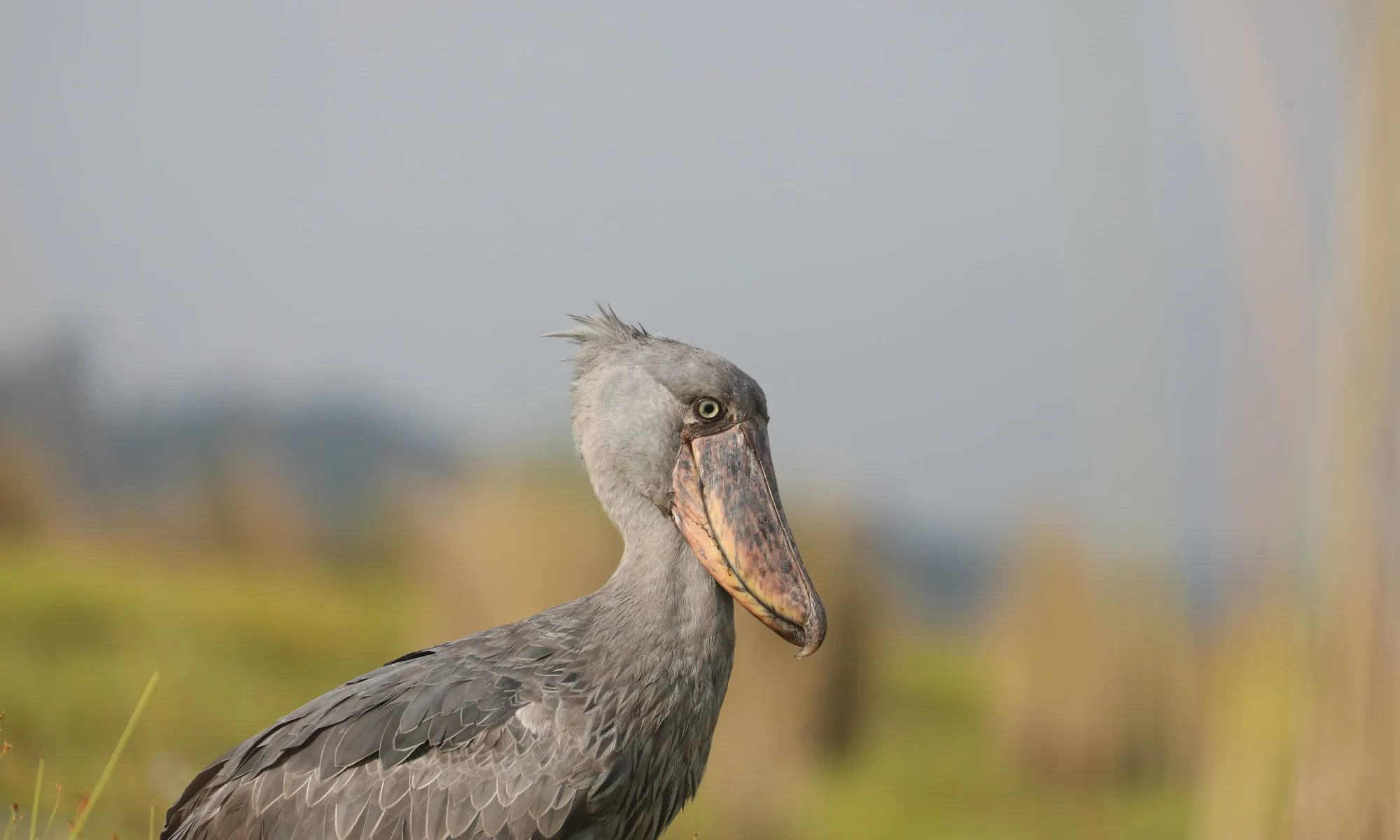
The number one on the list of top 10 rare birds to see in Uganda is the Shoebill. Birders from across the world flock to Uganda to get a rare glimpse of this giant of a bird! The shoebill gets the name from its enormous shoe-shaped bill. It is also known for its slow movements and tendency to stay still for long periods. This is why some give it the “statue-like” description.
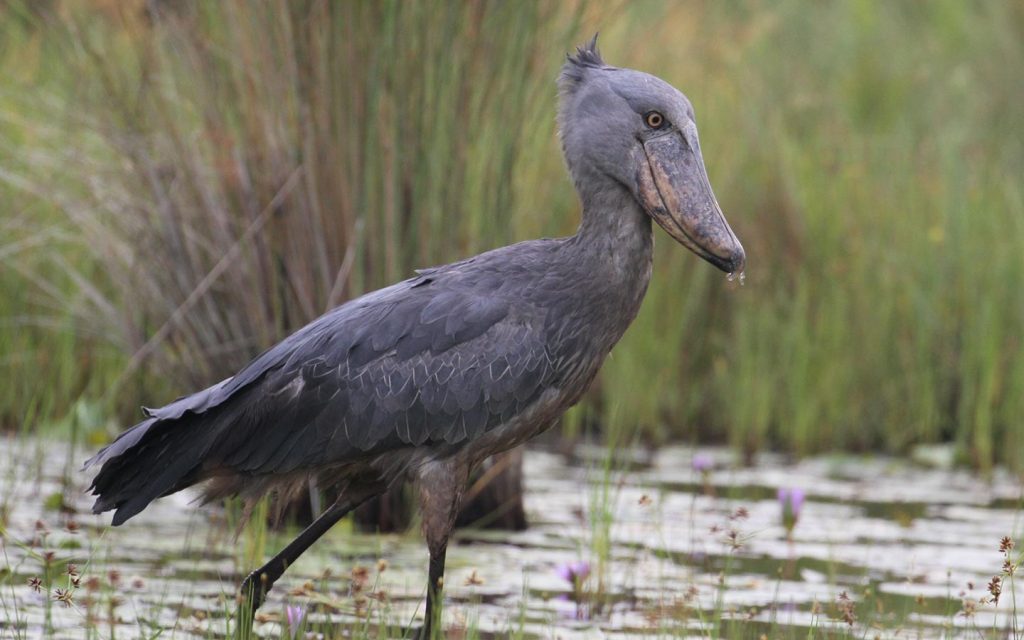
Top 10 rare birds to see in Uganda - the shoebill

These iconic birds are also pretty susceptible to human disturbances and may abandon their nests if troubled by humans.

Best Places to see the shoebill: The shoebill is endemic to Africa. It is therefore distributed in freshwater swamps of central tropical Africa. In Uganda, the best places to see the the shoebill are:

  • Mabamba Bay swamp – the best and most convenient location
  • Semliki National Park
  • Ziwa Rhino Sanctuary
  • Murchison Falls National Park – on a boat ride to the Delta area
  1. Grauer’s Broadbill:

The Grauer’s Broadbill (previously known as African Green Broadbill) is a bird endemic to the montane forests of the Albertine Rift Mountains in Uganda and Democratic Republic of Congo.

Top 10 rare birds to see in Uganda

The bird is easy to identify: by the beautiful leaf-green plumage, pale blue throat, upper breast and vent. It feeds on seeds and fruit, flowers and flower buds and some invertebrates.

Best Places to see the Grauer’s Broadbill: This bird is a rare resident in Uganda; but can be seen in Ruhija (Mubwindi swamp) in Bwindi Impenetrable Forest (about 2100 to 2200 meters altitude).

  1. Green Breasted Pitta:

This is a very colorful ground dwelling bird: with a strong straight bill, short tail and long legs. Despite its bright colors, it’s not easy to see as its fast. Although breeding birds call and display in the canopy, they can also be found in leaf litter on the forest ground.

Best Places to see the Green Breasted Pitta: restricted to interior forests of West and South West Uganda but the best place to see this beautiful bird is Kibale Forest National Park.

  1. African Finfoot:

This shy and elusive underwater bird resides in a range of habitats (forest, wooded savannah, swamps) across Africa; most probably where there are rivers, streams or lakes with a good cover by the banks. Physical features include a long neck, bright red-lobed feet with fin-shaped protrusions (thus giving it its name) and a striking sharp beak.

Usually seen singly or in pairs, finfoots are also very secretive and are often on a birdwatcher’s “wanted list“. Even experienced ornithologists see them very rarely; hence making them a prized sighting for both birders and twitchers.

Best Places to see the African Finfoot: Rare sightings around Lake Mburo within the National park. Boat cruises on the lake increase chances of sighting this shy bird.

  1. Regal Sunbird:

This is another Albertine Rift endemic occurring commonly in highland forests including edges and clearings above 1800m altitudes. Just like all males of the sunbird species, the Regal Sunbird is portrayed by its iridescent plumage and a decurved bill. Females are dark-olive green, with bright yellowish-olive edges on the primary feathers.

Regal sunbird, usually seen on a bird watching tour in Ruhija, Bwindi Impenetrable Forest National Park

The Regal sunbird is native to the tropics of Western and Central Africa. Its range includes Democratic Republic of Congo, Burundi, Rwanda, Tanzania and Uganda. Favorable habitats include evergreen mountain forest, mixed forest, secondary growth forest, scrubland and bamboo.

Best Places to see Regal Sunbird: Ruhija, Bwindi Impenetrable Forest National Park.

  1. Papyrus Gonolek: Rare birds to see in Uganda:

Another of the top 10 rare birds to see in Uganda is the Papyrus Gonolek. This is a species of bird in the family Malaconotidae. Records show sightings in Uganda, then Congo, Kenya, Rwanda and Tanzania. Like its name suggests, it has specialized habitat requirements; which are mostly restricted to papyrus swamps near rivers and lakes. Although it is not yet a threatened species, it has become rare due to habitat loss and pollution.

In Uganda, the shy papyrus gonolek lives in most swamps around Lake Victoria. But it is not easy to see as it hides amongst the papyrus reeds.

Top 10 birds to see in Uganda
  1. Shelley’s Crimsonwing

Shelley’s Crimsonwing is larger than the other known crimsonwing, with a distinctive red bill. It is also a rare endemic confined to the mountain forests along the Albertine Rift. This colorful finch inhabits closed-canopy moist forest, often in lush valleys near water, as well as forest edges and bamboo thickets.

The Shelley’s Crimsonwing lives in the Rwenzori Mountains and Bwindi Impenetrable Forest of Uganda. Other places include: Itombwe Mountain and Lake Kivu in Democratic Republic of Congo, Nyungwe Forest, Gishwati in Rwanda and Buruli forest in Burundi.

  1. Kivu Ground Thrush

The Kivu Ground thrush is also another rare bird to see in Uganda.  Its natural habitat is the subtropical or tropical moist montane forests. Other places where this bird is include: Kibiri Forest in Burundi, Democratic Republic of Congo and Nyungwe Forest in Rwanda.

Although currently considered a subspecies of the Abyssinian Ground Thrush, the Kivu Ground thrush differentiates from it by its brighter plumage.  This bird is rare, only occurring in Buhoma area of Bwindi Impenetrable Forest (1500 – 1850m) and on Mt. Muhavura (2900m).

  1. Karamoja Apalis

The Karamoja Apalis is a nominate and rare race only found in the Karamoja region in Uganda. The bird is around 11 cm long, with ash-grey color above. It has a short whitish supercilium and a relatively long tail. Both males and females look alike.

It is a very localized and uncommon East Africa endemic with two known populations. One is in the Mt. Moroto to Kidepo Valley National Park area in North Eastern Uganda. The other population is in the Wembere floodplains of Central Tanzania.

  1. Nahan’s Francolin

At about 20 cm in length, the Nahan’s Francolin is a relatively small and terrestrial bird with red legs and eye ring; brownish upperparts and black and white under parts and head.  It is an unusual francolin occurring in small groups, although often shy and difficult to observe.

They draw attention to themselves with their loud calls especially in the mornings and evenings. During this time, they may appear along forest edges and trails.

In Uganda, this endangered species is restricted to Budongo, Bugoma and Mabira Forests.

  1. Rwenzori Batis

The Rwenzori Batis is a small, shy but active black and white bird. Key physical characteristics include a very broad black breast band and two small white spots on the fore crown. The sexes are similar; they only differ in eye colour. Males have yellow eyes while females tend to have orange / red eyes.

The Rwenzori Batis is an Albertine Rift endemic, particularly to the Ruwenzori Mountains in Uganda. It inhabits montane forests from 1600 – 2600 m altitudes, but with a preference for forest undergrowth and mid-level tangles.

  1. Chapin’s Flycatcher

Last on our list of the top rare birds to see in Uganda is the Chapin’s Fly catcher. It is among the varied group of grey and brown forest flycatchers restricted to the West. It is a rare and little known bird which inhabits forest tree canopies. Buhoma in Bwindi Impenetrable Forest National Park is where the rare bird resides.

Chigo Tours Africa offers a wide range of bird watching tours in Uganda. Contact us for an exciting and memorable bird watching safari in Uganda!

Mabamba Bay swamp: A bird-lovers paradise!

Mabamba Bay swamp is a bird-lovers dream destination. It is home to 260 bird species, including the massive shoebill – Uganda’s most sought-after bird!

This papyrus swamp is characterised by small channels of marsh-filled water and lagoons and is located about 57km from Kampala city and an hour’s drive from Entebbe city. Lying on the edge of Lake Victoria, Mabamba Bay is a massive 16,500 hectares and is part of the list of Wetlands of International Importance as chosen by the Ramsar Convention.

Visiting Mabamba Bay is quite the adventure, especially when there are so many bird species to be spotted, including the elusive shoebill! Here are some great activities that you can get up to while touring the area:

Shoebill canoe tour

Getting into a canoe in search for this prehistoric-like bird is a great experience. The shoebill is an amazing bird to behold and certainly one of the world’s most iconic. Its massive beak and brilliant large eyes are usually spotted first.

Meet the local fishermen

There was a time when the local community used to be enemies with the birds as they competed for the same fish, but today many have been trained as local tour guides who now strive to preserve both the birds and the swamp.

mabamba bay

Local fisherman

They are happy to tell you a story about how Mabamba Bay is named after a lungfish locally known as ‘emamba‘. According to Hanington, a local guide who has lived on the bay for 20 years, the lungfish can survive on land for up to three days if it is watered every now and again.

Rediscover the beauty of the common birds

On a canoe tour, look out for birds in the reeds and on the water such as the hamerkop, papyrus gonolek, yellow-billed ducks, spur-winged geese, African jacana, and purple swamhens

Taste mouth-watering fresh fruits

Across the bay are little islands where the local people grow lots of organic sweet pineapples, avocados and juicy tomatoes. 

Enjoy the sunset by Lake Victoria

Lake Victoria is Africa’s largest freshwater lake, and the second largest freshwater lake after Lake Superior in the United States/Canada

Other sites to see shoebills in Uganda

There are other areas where you can spot the shoebill, such as at Delta point in Murchison Falls National Park, Lake Mburo National Park, Ziwa Rhino sanctuary and Semliki Game Reserve.

Contact Chigo Tours Africa to arrange a birding tour to see the shoebill and all the other wonderful bird species, as well as meet the local people and enjoy great sunsets!

Top Bird Watching Destinations in Uganda

Uganda, although land locked, is a country gifted by nature. From the tropical rain forests, to savanna grasslands, to the snow capped mountains and the immense freshwater lakes; the diverse environment can only mean one thing – a diversity of animals, birds and lots of other creatures. With over 1079 bird species, Uganda has become a well known bird watching destination in the whole of Africa. Below is a list of the top bird watching destinations in Uganda.

What makes Uganda a great bird watching destination?  There are many bird watching destinations in Uganda. This is because of the various national parks that are actually the biggest habitats for most of the bird species in the country. The best birding season is during rainy months of March to May and September to November when birds are most active and breeding. But still Uganda remains the finest birding destination all year round. As you take time to marvel at the spectacular birds, you will certainly come across a diversity of wildlife like elephants, hippos, lions, leopard, antelopes and primates. As a result, your bird watching safari into a memorable encounter.

Top 10 Bird Watching Destinations in Uganda:

Bwindi Impenetrable National Park: the Ultimate Gorilla Experience

Bwindi Impenetrable National Park is a well renowned mountain gorilla sanctuary. And now, it has become a key bird watching destination in Uganda. With an impressive list of species, Bwindi is indeed Africa’s richest forest. Bwindi species include 51 reptiles, 88 moths, 120 mammals, 200 trees, 310 butterflies, 348 birds.

Bird watching in Bwindi Forest National Park takes place mainly along the forest trails of Buhoma area and the Mubwindi Swamp and community trails of Ruhija section. 348 bird species have been recorded at Bwindi. These include 24 restricted-range species, 23 of which are confined to the Albertine Rift and 4 are globally threatened; hence making Bwindi impenetrable national park- africa’s number one birding spot. Endangered Grauer’s Broadbill, Grauers’ Rush wabbler, vulnerable Shelley’s crimsonwing, Regal sunbird, Chestnut throated Apalis and Chapin’s Flycatcher, Purple breasted sunbird, and Blue headed sunbird can be spotted here.

Bwindi Bird Watching

Regal sunbird, usually seen on a bird watching tour in Ruhija, Bwindi Impenetrable Forest National Park

Other key species include: the Rwenzori batis, cinnamon chested bee eater, handsome francolin, white tailed crested flycatcher, yellow eyed blue flycatcher, red-faced woodland warbler, Ross’s Turaco, black bee-eater, Grey-cheeked hornbill, and so many more.

Mabamba Bay: a marshy paradise for birds

Mabamba bay is a wetland on the edge of Lake Victoria. The wetland was designated as a Ramsar Site and an Important Bird Area. It is home to over 260 bird species, most key of which is the elusive shoebill. It is also believed to be a major breeding site for the endangered shoebill, a bird species loved by many bird watchers.

Bird watching in Uganda, shoebill in Mabamba Bay

Shoebill is one of Uganda’s most sought after bird.

But there are other bird species found in Mabamba Bay. They include the African jacana, blue swallow, papyrus gonolek, yellow warbler, malachite kingfishers, lapwings, Blue breasted bee-eater, common moorhen, swamp flycatcher, African water rail, Goliath Heron, Winding cisticola, African pygmy goose, African pied wagtail, osprey, red bellied firefinch and hammer kops among others.

Bird watching in Mabamba, as the canoe is navigated in the marshy waters is quite an adventure itself.

Murchison Falls Park: World’s most Powerful Waterfall

Uganda’s biggest national park, Murchison Falls, well known for its 43m tall waterfall and a diverse of wildlife is another key bird watching destination in Uganda. It also offers a wide variety of experiences – wild life game viewing, boat cruise to the world’s most powerful waterfall, hiking to the top of the falls and bird watching.

With over 451 bird species, Murchison Falls makes one of the best birding spots. And the great thing about bird watching here is that it can easily be done anywhere, or with any activity; during game drives, on the boat cruise along the River Nile or while taking a savannah walk.

Abyssinian Ground Hornbill in Murchison Falls National Park

The bird species one is likely to spot here include both Albertine rift endemics, water and savannah birds like the shoebill along the Victoria Nile delta mash, African Darter, weaver birds, long tailed nightjar, osprey, Palm-nut vultures, Abyssinian ground hornbill, martial eagle, Giant kingfisher, black headed lapwing, grey headed kingfisher, sandpipers, Denham’s bustard and pied kingfishers. Others include the Gray Crowned crested crane, Saddle billed stork, secretary bird, and black billed barbet and a lot more.

Budongo Forest Reserve: Royal Mile

Budongo forest gazetted as a forest reserve in 1932 and neighbors Murchison falls National Park  in the South. It is known for its high concentration of hardwood trees mainly mahogany species. The reserve is also home to 360 bird species, 290 species of butterflies, 24 mammals 465 species of trees and shrubs. The forest also supports 11 species of Guinea-Congo Forests, 6 species of the Afro-tropical Highlands and 3 of the Somali–Masai biome.

Bird watching in Budongo forest (Royal mile sector) reveals key species like chocolate backed kingfisher, chinspot batis, Green backed eremomela, and Puvels illadopsis. Other notable species are Chin-spot Batis, Grey-backed Camaroptera, Lemon-bellied Crombec, African Moustached Warbler, Yellow-throated Greenbul, African Citril;  African Golden-breasted Bunting, Black-crowned Waxbill, Bronze Mannikin, Black-billed Bluebill, Black-winged and Red Bishop.

Lake Mburo National Park: Whispers of the wild:

This beautiful jewel of a national park offers the perfect getaway for a long weekend. It is located 3.5hours to Kampala city and offers a variety of antelopes like the impala, buffalo, Topi and the largest herds of zebra together with a vast variety of birds.

The Grey crowned crane (Uganda’s national bird) although listed endangered can be spotted on a bird watching tour in Uganda

The park is home to over 350 bird species – both migratory and residential. Some of the bird species found here include the African Finfoot – one of Uganda’s most sought after bird known for being shy and secretive, the papyrus gonolek; black headed gonolek, Holub’s Golden weaver- one of the biggest weavers in Africa. Others are saddle billed stork, papyrus yellow warbler, white winged warbler, brown chested wattled plover; black-bellied bustard, bare faced go-away bird, rufous-bellied heron, coqui francolin, black collard, red faced barbet, spot flanked and crested barbets.

Queen Elizabeth National Park: A Medley of Wonders

Queen Elizabeth National Park is the most popular destination in Uganda. It is mostly famous for tree climbing lions in the Ishasha sector. The park is blessed with an assortment of crater lakes, savanna plains, swamps, rivers and the amazing Kazinga Channel which is home to an abundance of wildlife and spectacular birds. Queen Elizabeth National Park has the highest number of bird species in Uganda; with over 600 species recorded.

Key species here include: the African Mourning dove, Grey Headed Kingfisher, Swamp Flycatcher, Grey-capped warbler, black headed Gonolek , red Chested sun-bird, Slender-billed, Yellow –backed and lesser masked weavers, pin-tailed Whydah and Brimstone canary. Gabon and Slender –tailed Nightjars, Temminck’s courser, Collared Pratincole, Red- capped Lark, spur-winged plovers, Squacco heron, Pink and white backed pelicans, yellow backed weavers, pied kingfishers and a lot more. A boat cruise on the Kazinga channel reveals an amazing combination of water birds in large numbers.

Uganda's kazinga channel, a paradise for waterbirds

Bird watching on Uganda’s kazinga channel

Kibale Forest National Park: The Primate Capital of the World

Kibale Forest National Park is famously known for chimpanzee tracking. The park is also home to other 12 primates and hence is also known as the “primate capital of the world.”

But Kibale is not only a primates’ paradise. With its thick forest cover, sprinkled with patches of grassland and swamp, Kibale is indeed one of Uganda’s most rewarding birding destinations.

The park contains over 375 bird species. The green breasted pitta- another Uganda’s most sought after can only be found in this part of the country. Bird watchers also visit Bigodi Wetland Sanctuary, another top bird watcher’s destination. Bigodi is also the home of the Great Blue Turaco. Other species found here are: the papyrus Gonolek, White winged warbler, papyrus canary, white-collared oliveback  and white spotted flufftail. The yellow spotted barbet, hairy breasted barbet, Yellow-billed barbet, grey winged robin chat, and superb sunbird, black crowned waxbill, black bishop; brown-throated wattle eye are also seen here.

Kibale Forest National Park

Black headed weaver in Kibale Forest National Park.

Mgahinga Gorilla National Park: where Gold meets Silver:

At just 33.9 sq km, the small park enjoys a magnificent setting on the northern slopes of the Virunga Volcanoes. Two rare primates, the Mountain gorilla and the Golden monkey can easily be tracked here. In addition to this, mountain hiking to the dormant volcanoes is another activity that can be done here.

In Mgahinga, bird watching is mostly done on the edge of the park or along the buffalo wall. Although the park is small in size, bird watching here is very rewarding. Over 76 bird species are recorded and notable birds spotted here include Rwenzori Turaco, Black kite, crowned crane, crowned hornbill and Handsome francolin. The Kivu Ground Thrush, Alpine chat, Dusky turtle dove, White-tailed Blue flycatcher, Lagdens’s Bush shrike, montane Double collared sunbird and scarlet-tufted malachite sunbird among others.

Semliki National Park: the true Birders’ Haven

Bird watching in Semliki National Park is spectacular, with over 441 recorded species. This represents 40% of Uganda’s total bird species and 66% of the country’s forest bird species. Birders who visit Semliki are richly rewarded with the very best forest birding in Uganda.

On a birding tour, species to look out for here include: White Crested hornbill, Black-casqued Wattled hornbill, Black Dwarf hornbill, Maxwell’s black weaver, Crested Malimbe, the Nkulengu Rail, Yellow-throated Cuckoo, Piping Hornbill, Red-billed Dwarf Hornbill, White-crested Hornbill, , Red-rumped Tinkerbird, African Piculet, White-throated Blue Swallow, Yellow-throated Nicator, Leaf-love, Swamp Palm Bulbul, Lemon-bellied Crombec, Red-bellied Malimbe, Blue-billed malimbe, Chestnut-breasted Negro Finch, and the Orange-cheeked Waxbill.

Kidepo National Park: the true African Wilderness

Kidepo Valley National park is indeed a true African Wilderness and another top bird watching destination in Uganda. Big game favorites, the elephant, giraffe, zebra, eland, Hartebeest, lion, hyena, buffalo and cheetah roam the rolling grasslands; far beyond the horizon into the distant mountain ranges

Kidepo Valley also boasts of a variety of bird species (470 species). The namaqua dove, Abyssinian roller, Abyssinian ground horn-bill, Black breasted barbet, Abyssinian scimitar-bill; chestnut weaver, Golden pipit and Greater kestrel call this paradise home. Other species seen are Karamoja apalis, Northern carmine bee eater, red throated bee eater, white bellied go-away and purple grenadier.Do not miss out the Fox kestrel; Jackson’s hornbill, pygmy falcon, rufous chatterer, and clapper-ton’s Francolin.

Bird watching tours in Kidepo Valley National Park are very interesting as rare species are easily spotted. Here bird watching can be done all year round, although the months of November, March to April are great for spotting bird specials.

Please contact us if you are interested in a bird watching tour to Uganda.